Spreadable Lies: The National Gaslighting Campaign That Made Australians Pretend Vegemite Is Food
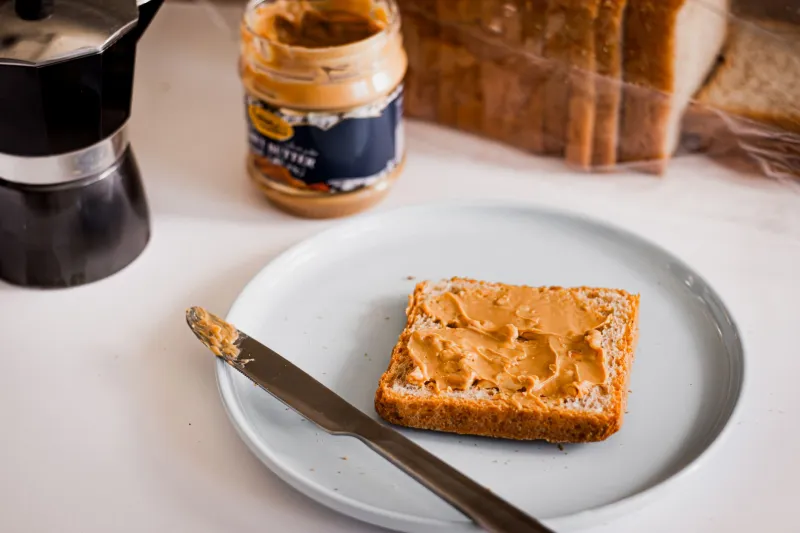
Somewhere in Australia right now, a backpacker is being handed a piece of toast. The toast is covered, generously and maliciously, in a thick black layer of what their host has described as "a national treasure." The tourist takes a bite. Their face does something complicated. Their soul briefly departs their body.
The Australian watching this unfold is trying not to laugh. And also, quietly, they are thinking: yeah, fair enough.
Because here's the thing nobody says out loud at breakfast: Vegemite is genuinely difficult to enjoy, a significant portion of Australians don't actually like it, and we have collectively agreed — without ever formally meeting to discuss this — to absolutely never admit that to anyone.
Welcome to the Great Vegemite Conspiracy. Population: twenty-six million people and one very powerful jar.
The Gaslighting Starts in the Highchair
The indoctrination begins early. Dangerously early. Before you have the critical thinking skills to question why you're being fed something that smells like a brewery had an argument with a salt mine, Vegemite has already been spooned into your mouth and declared delicious by every trusted adult in your life.
By the time you're old enough to form an opinion, the damage is done. You don't love Vegemite. You've been told you love Vegemite, which is a different thing entirely, and the distinction gets blurrier every year.
This is, to be clear, a generational conspiracy. Your nan did it to your mum. Your mum did it to you. You will, statistically speaking, do it to your own kids while telling yourself you're preserving culture. What you are actually preserving is a jar of extremely salty yeast extract that has somehow convinced an entire continent it's food.
The Application Rules Nobody Teaches You But Everyone Knows
Here is the part that makes the whole thing even more suspicious: there are rules. Extremely specific, unwritten, universally understood rules about how Vegemite must be applied, and breaking them is treated as both a personal failing and a crime against nature.
Rule one: butter first. Always butter, always abundant, always applied before the Vegemite so the two can meld into something that tastes less like industrial byproduct and more like a choice a human being might make voluntarily.
Rule two: a thin layer. The thickness of Vegemite acceptable for consumption is roughly equivalent to a firm suggestion rather than a commitment. You are not spreading it. You are hinting at it. You are whispering Vegemite across toast in the hope that the bread absorbs just enough flavour to be interesting without actually tasting like the jar.
Rule three: never, under any circumstances, let a tourist apply their own serving unsupervised.
This last rule is enforced with the urgency of someone trying to prevent a small disaster, because tourists — bless them — treat Vegemite like peanut butter. They glob it on. They spread it thick. They take a bite that would floor a seasoned Australian, and then we act shocked, as though we didn't hand them the jar knowing exactly what was about to happen.
The tourist's suffering is, if we're being honest, partially our fault. And also extremely funny. These two things coexist comfortably in Australian culture.
The Generational Divide Nobody Talks About
Spend five minutes asking Australians about their actual Vegemite habits and the picture gets complicated fast.
Older Australians — particularly those who grew up in the postwar era when Vegemite was actively marketed as a health food and parents were told it built strong children — tend to have a genuine, almost devotional relationship with the stuff. For them, it's not performance. It's breakfast. It's comfort. It's real.
Millennials occupy a murky middle ground. Many will confidently claim to love Vegemite while quietly admitting, when pressed, that they haven't actually bought a jar in three years and mostly eat it at their parents' house because it's just there.
Gen Z, meanwhile, appears to be treating Vegemite with the same energy they apply to everything their parents liked: mild ironic appreciation, occasional TikTok content, and absolutely no plans to incorporate it into their actual diet.
The jar persists. The loyalty is mostly theoretical. The conspiracy continues.
Why Admitting You Hate It Feels Like Renouncing Your Citizenship
Here's the psychological trap at the centre of all this: Vegemite has been so successfully marketed as a symbol of Australian identity that rejecting it feels uncomfortably close to rejecting the country itself.
It's on the shelves at every supermarket. It's in the jingle you still know by heart even though you haven't heard it in fifteen years. It has its own branded merchandise. There is, somewhere in Australia, a person who owns a Vegemite-themed beach towel and uses it unironically.
To say "actually, I don't really like Vegemite" in a room full of Australians is to invite a very specific kind of social scrutiny. People will look at you the way they look at someone who admits they find cricket boring or doesn't own a pair of thongs. Not with anger, exactly. More with a quiet concern that something has gone fundamentally wrong with your formation as a person.
So most people don't say it. They eat the toast when it's offered. They smile. They say it's an acquired taste. They acquire it, or at least they claim to, and the whole beautiful fiction rolls forward into another generation.
The Acquired Taste Myth
"It's an acquired taste" is the most useful phrase in the Vegemite defender's vocabulary, and also the most suspicious.
Think about what that phrase actually means. It means: this does not taste good to you right now, but if you keep eating it, eventually your palate will give up fighting and accept the situation. That's not a recommendation. That's a description of surrender.
We don't describe things we genuinely enjoy as acquired tastes. Nobody says a good meat pie is an acquired taste. Nobody says a Tim Tam requires patience. We reserve that phrase specifically for things that are, by any objective measure, a bit of an ask — and then we use it to reframe the difficulty of enjoying something as a personal growth opportunity.
Vegemite fans will say this is unfair. They will say they genuinely love it, that it's savoury and complex and deeply satisfying, and some of them are absolutely telling the truth. The true believers exist. They are not the problem.
The problem is the rest of us, who nod along and spread our thin, butter-heavy, barely-there layer of Vegemite every morning and call it love when really it's just a very long-running habit we're too proud to examine.
A Nation, United in Polite Fiction
None of this is to say Vegemite should be cancelled, retired, or removed from the cultural canon. It is, whatever its actual flavour profile, genuinely ours. It was invented here, it has been eaten here for a century, and the jar sitting in the back of your fridge — slightly crusty around the lid, bought sometime before the last federal election — is as Australian as anything you own.
But maybe, just maybe, we could afford to be a little more honest about it.
Not with tourists. Absolutely not with tourists. That tradition is sacred and must be preserved.
But with ourselves? We could admit that the love is complicated. That the taste is an acquired one in the truest, most exhausting sense. That some of us are performing a loyalty we feel in our bones even when our tastebuds are staging a quiet protest.
Vegemite doesn't need our honesty. It's been around since 1922 and it'll outlast all of us.
But it might be nice, just once, to look at that dark little jar and say: yeah, you're a lot. But you're ours.
And then apply a thin layer. Obviously. What are you, a tourist?