Trolley Rage and Tarmac Diplomacy: The Unhinged Science of the Aldi Car Park
There is a version of you that exists only inside an Aldi car park. This version is twitchy, hyper-aware of spatial geometry, and deeply suspicious of anyone reversing within forty metres. You have never met this person in any other context — not at work, not at a barbecue, not even during a Bunnings run. But the moment you clip that indicator on and nose your way toward a budget supermarket, something primal takes over.
Australia, we need to talk about what we're doing out there.
The Approach: Already Committed Before You've Parked
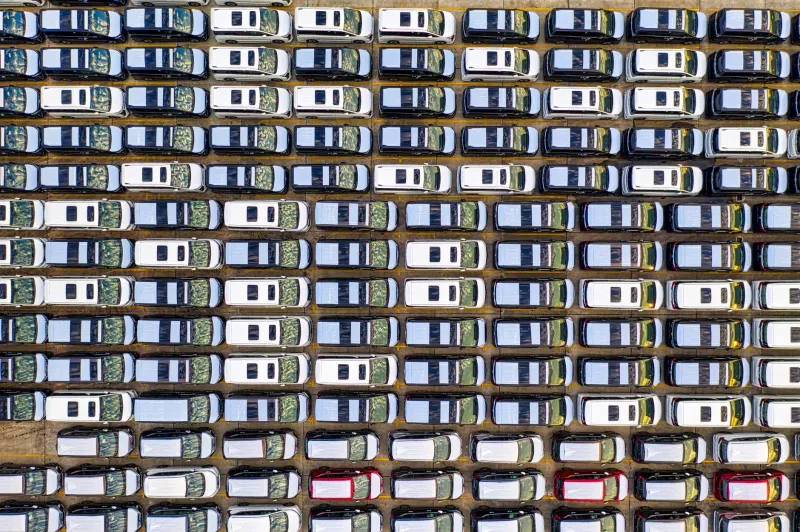
The Aldi car park experience begins before you've even found a spot. There's the crawl — that slow, predatory loop where every driver maintains exactly the same pace as the car in front, collectively willing someone, anyone, to reverse out. Eye contact is made. Eye contact is broken. Someone's blinker goes on and the whole queue holds its breath like it's the last over of a Test match.
Then the reverse-park standoff happens. Two cars want the same space. Both have a reasonable claim. One of them got there a fraction of a second earlier, which in Aldi car park law is equivalent to planting a flag on the moon. Neither driver will make the first move. They just sit there, engines idling, locked in a staring contest that could last until the weekend specials change.
Eventually someone blinks. They drive off with the energy of a person who has made peace with their own defeat, and the winner reverse-parks so slowly and so deliberately it becomes a statement. I earned this. Witness me.
The Gold Coin: A Tiny Circle of Enormous Power
If you want to understand Australian consumer psychology, forget focus groups and brand surveys. Just watch what people do when they discover they don't have a gold coin for the trolley.
The options are:
- Dig through every compartment of the car in increasingly frantic fashion
- Approach a stranger and ask to swap for two fifties, which is somehow more vulnerable than asking for a kidney
- Carry everything in your arms like a punishment
- Grab a trolley from someone who's just finished loading their boot, in a transaction so smooth and choreographed it feels like a drug deal
That last one — the trolley handover — is one of the few genuinely wholesome moments Australian society produces on a regular basis. Two strangers, briefly united by logistics, exchanging a trolley and a nod that says we're in this together, mate. No words necessary. Sometimes a coin changes hands. Sometimes it doesn't. The vibe is the currency.
And then there are the people who return their trolley without taking their coin back. These people are either saints or they've already ascended beyond earthly concerns. Either way, do not question them.
The Walk: Purposeful, Panicked, Permanently Confused
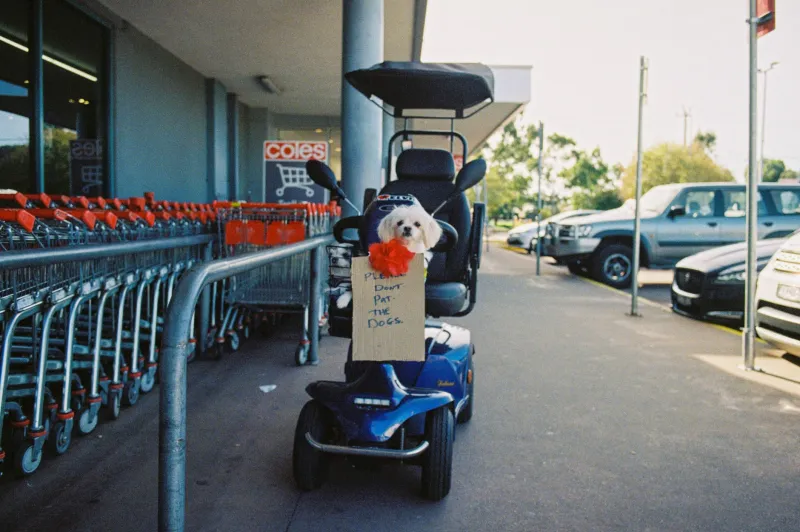
Once you're out of the car, the Aldi shuffle begins. It's a very specific gait — somewhere between a power walk and someone who's just remembered they left the stove on. Heads swivel. Trolleys are navigated with the confidence of someone who has never operated a trolley before in their life.
The Aldi car park has its own pedestrian logic that bears almost no relationship to normal foot traffic. People cut diagonally across lanes. Trolleys are abandoned at angles that suggest the owner simply evaporated mid-push. There's always one family unit moving as a single, slow-moving organism, blocking the entire thoroughfare while debating whether they need more dishwasher tablets.
And the trolley bays. Oh, the trolley bays. They are positioned with all the spatial reasoning of someone who lost a bet. You'll find one bay crammed so full the trolleys are basically load-bearing, and another thirty metres away sitting completely empty. Nobody uses the empty one. That would require walking slightly further, and we have already established that Aldi shoppers are operating at maximum capacity just getting from the car to the door.
The Abandoned Trolley: A Mystery for Our Times
Every Aldi car park has them. Trolleys left in spots that make no architectural sense. Not near a bay. Not near a car. Just... marooned. Adrift in the middle of a parking lane like a tiny metal ghost ship.
Who leaves these trolleys? What happened in the final moments of their shopping trip? Did they simply run out of motivation at the two-metre mark? Did they receive a phone call so urgent they had to drop everything? Are they okay?
The abandoned trolley is the Aldi car park's great unsolved mystery, and frankly, it says a lot about us as a people that we've collectively decided not to investigate it any further.
The Load-and-Leave: An Art Form Under Pressure
Packing the boot after an Aldi run is its own psychological event. The Aldi shopping experience is famously fast — you basically sprint down the aisle while someone throws groceries at you — which means by the time you reach your car, you are slightly flustered and holding several bags that were not designed to be held simultaneously.
There is always one item that won't fit neatly. A box of cereal that's too tall. A bag of potting mix that someone convinced you to buy because it was in the Special Buys aisle and seemed like a good idea at the time. You rearrange. You re-rearrange. The person waiting for your spot is now visible in your peripheral vision, and their presence has transformed a simple packing task into a timed Olympic event.
You slam the boot. It doesn't close properly. You try again. It does. You return the trolley — you're not an animal — and then you sit in the driver's seat for a moment, just breathing, before you pull out and rejoin the crawl.
Why We Keep Coming Back
Here's the thing about the Aldi car park. It is objectively chaotic, mildly stressful, and occasionally the setting for low-stakes territorial disputes that feel enormous in the moment. And yet Australians return to it, week after week, with the loyalty of a sporting fan whose team hasn't won a final in a decade.
Because the Aldi car park is honest. It doesn't pretend everyone's going to be gracious and orderly. It doesn't have valet parking or numbered bays with sensors. It's just people, trolleys, and asphalt, all trying to get through the week without spending too much on groceries.
There's something almost beautiful about that. In a daggy, slightly unhinged, very Australian kind of way.
Now go return your trolley. You know who you are.