Bunnings or Bust: The Deeply Unhinged Reason Australians Treat the Hardware Store Like a Second Home
Let's be honest with each other for a moment. You have never — not once in your life — gone to Bunnings and bought only the thing you went there for. You walked in for a $3.80 bag of wood screws and walked out with a new garden hose, a bag of potting mix, two bags of mulch you have no immediate use for, a replacement tap washer, and a mop. The mop was not on the list. The mop was never on the list. The mop simply happened to you, and you let it.
This is the Bunnings Condition. It is uniquely, gloriously, irreversibly Australian.
The Pilgrimage Begins in the Car Park
Before you've even touched a single shelf, you've already entered the ritual. The Bunnings car park is its own civilisation — a flat, sun-bleached republic of utes, tradie vans, and the occasional confused hatchback that clearly took a wrong turn from Kmart. Navigating it requires a specific kind of calm that most Australians only access after two cups of instant coffee and a scroll through the weekly catalogue.
There is a hierarchy in that car park, and everyone instinctively knows it. Tradies in white utes go straight to the trade entrance. Dads with trailers get the wide bays. Blokes in high-vis who are absolutely, definitely not supposed to be here for three hours park up front with the confidence of men who have never once questioned their choices. And then there's the rest of us — wandering the rows with the thousand-yard stare of someone who genuinely cannot remember where they parked.
We spoke to Gary, a 54-year-old semi-retired plumber from outer Melbourne who visits Bunnings an average of four times per week. "I don't always need anything," Gary admitted, without a shred of embarrassment. "Sometimes I just go for a walk around. It's peaceful. The timber section especially."
Gary is not alone.
What Your Trolley Says About You
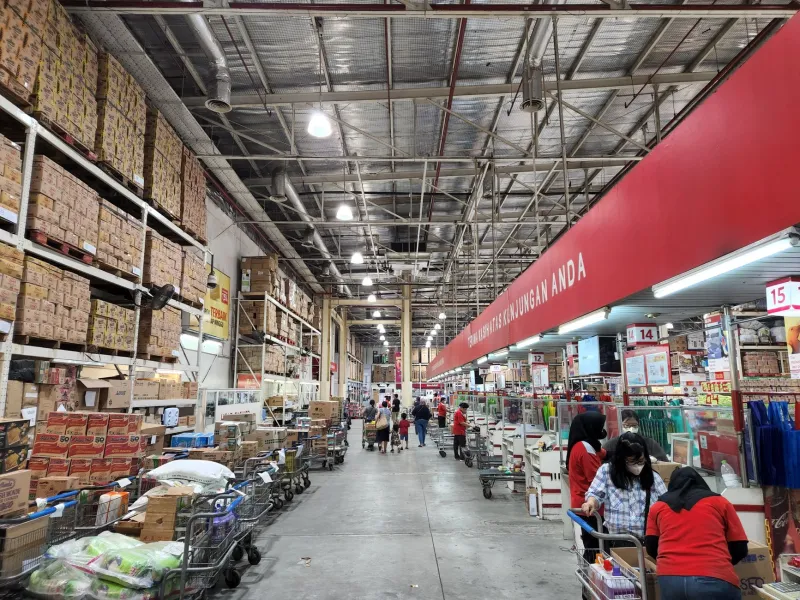
Once inside, the real social anthropology begins. The Bunnings trolley is a window into the soul — or at least into the weekend ambitions — of every Australian who pushes one.
The Tradie Trolley: Loaded fast, loaded heavy. PVC pipe sticking out at a 45-degree angle that is definitely a hazard. The owner moves with purpose and makes zero eye contact. Respects their time. Respects yours. Gone in eight minutes.
The Weekend Warrior Trolley: A chaotic monument to optimism. Timber lengths of three different sizes, a level, some decking screws, and a packet of cable ties that will be used for approximately none of the things they were purchased for. Owner has watched four YouTube tutorials and is full of dangerous confidence.
The "I Only Came In For One Thing" Trolley: Started as a hand basket. Became a trolley somewhere around aisle seven. Now contains a door handle set, a bag of river pebbles, a box of AA batteries, and — inexplicably — a small garden gnome. Owner is not proud. Owner is also going to come back next Saturday.
The Retired Couple Trolley: Moving at a pace that suggests they have nowhere else to be, which is correct. They are comparing two near-identical shades of exterior paint. They will be here until lunchtime. They have earned this.
The Psychology of the Orange Shed
So why does this keep happening? Why do Australians treat Bunnings with a reverence typically reserved for family gatherings and footy grand finals?
Part of it is aspiration. Bunnings sells the idea of self-sufficiency — the notion that you, specifically you, could tile a bathroom or build a raised garden bed or fix that dodgy door frame that's been swollen shut since 2019. The store is a physical manifestation of the Australian DIY identity: we don't call tradespeople when we can have a crack ourselves and spend three weekends making it worse before eventually calling a tradie anyway.
But there's something else going on, too. Bunnings has become a legitimate social venue. The sausage sizzle out front is practically a community institution. People bump into neighbours in the paint aisle. Retired blokes linger in the power tools section the way teenagers used to hang around shopping centres — not buying anything, just being there. It is, in its own daggy way, a third place. Not home, not work, but somewhere comfortable and familiar and smelling faintly of treated pine.
Sharon, a 41-year-old teacher from Brisbane, described her relationship with Bunnings as "genuinely therapeutic." "It's the only place I go where I don't have to make any decisions that matter," she said. "I can just wander around and look at plants and feel like I'm doing something productive even if I buy nothing."
She bought a new letterbox on the way out. She already has a letterbox.
The Shortage That Broke the Nation
All of which brings us to the real panic — the thing that reveals just how deep this attachment runs. When Bunnings stock runs low, when the particular deck stain you need is out, when the specific size of garden stake has sold through and won't be back until Tuesday, there is a very particular kind of quiet devastation that settles over the Australian shopper.
This is not rational. You could go to another hardware store. You could order online. You could, theoretically, delay the project by 48 hours without any meaningful consequence to your life. But you won't. Because it's Bunnings. And Bunnings is supposed to have everything. That is the unspoken contract.
The COVID-era hardware shortages revealed something interesting: Australians, suddenly stuck at home and deprived of their usual routines, descended on hardware stores with the energy of people who had just discovered a new religion. Bunnings queues stretched around car parks. Timber sold out. Basic fasteners became precious commodities. And through it all, the Australian public's devotion only deepened. If anything, the scarcity made the love stronger.
The Return, Always the Return
Here's the thing nobody tells you: every Bunnings trip contains within it the seed of the next Bunnings trip. You buy timber and realise you need different screws. You buy the screws and realise you need a new drill bit. You buy the drill bit and notice the sandpaper is on special. By the time you've finished your project, you've been back four times and spent roughly three times your original budget.
And somehow — somehow — this is fine. It's expected. It's almost comforting in its predictability.
Gary put it best. We caught him on his way out, carrying a bag of concrete mix and a new pair of work gloves he definitely didn't need. "Mate," he said, loading up the ute with the ease of a man who has done this a thousand times, "where else are you gonna go?"
He's not wrong. He's never wrong. None of us are, really. We're just Australians, and this is what we do on a Saturday morning.
See you in the car park.