Hi-Vis, Hard Hats and the Holy Khaki: Why Every Bloke at Bunnings Looks Like He Clocked Off From the Same Job
Walk into any Bunnings on a Saturday morning and you'll witness one of Australia's most baffling sociological phenomena: hundreds of completely unrelated men who've somehow arrived in identical outfits. It's not a uniform. Nobody sent a memo. There's no dress code printed on the back of a Loyalty Card. And yet here we all are — a sea of khaki shorts, steel-capped boots, and hi-vis vests that have seen better days — looking like we're about to pour a concrete slab together.
This is the Bunnings Tradie Uniform. Unwritten, unspoken, and yet obeyed with a religious devotion that would make a school principal weep with envy.
The Sacred Garments, Catalogued
Let's be methodical about this. The full ensemble, as observed across every Bunnings from Broome to Bairnsdale, consists of the following:
The Khaki Shorts. Not chinos. Not cargo pants with seventeen pockets. Khaki shorts — preferably with a small paint smear on the left thigh that you've stopped noticing. They sit at a length that says I'm practical but not a tradie from the 1980s. Usually Stubbies, King Gee, or a no-name brand bought from a petrol station in 2019 that's somehow outlasted two relationships.
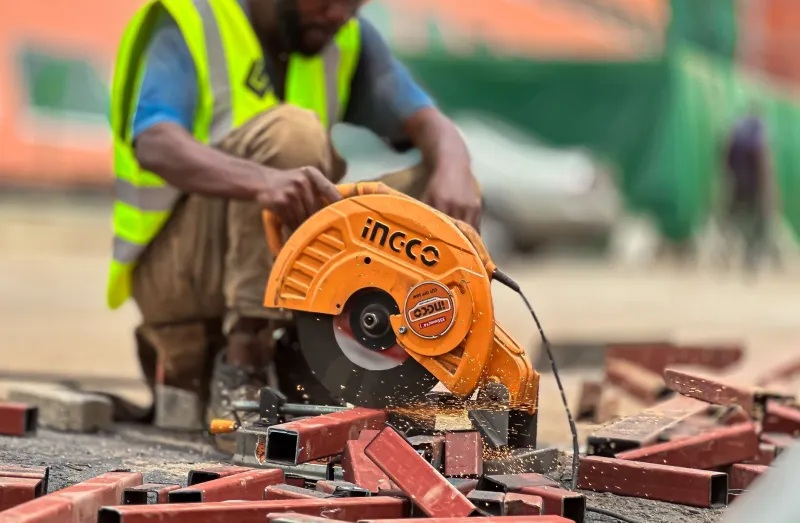
The Hi-Vis Vest. Here's the thing: at least forty percent of the blokes wearing one of these on a Saturday have absolutely nowhere to be after Bunnings. They're not heading to a worksite. They're heading home to eat a sandwich and watch the footy. And yet the vest stays on. Because once you're in the vest, mate, you belong. You're part of the crew. People ask you where the timber dowels are and you answer with confidence even if you have no idea.
The Work Boots. Steel-capped, lace-up, and carrying the kind of character that only comes from years of actual use — or, alternatively, one very dramatic weekend project that nearly ended in a trip to emergency. Either way, they communicate a single message: I have done things. Physical things. With my hands.
The Faded Polo or Tradie Tee. Optional, but highly recommended. Ideally from a business that may or may not still exist. Bonus points if it has a local plumber's number on the back and that plumber is your brother-in-law.
Is It Practicality, or Is It Tribal?
Here's where it gets interesting. Ask any bloke why he's dressed like this and he'll tell you it's purely practical. Boots are for safety. Shorts are comfortable. The vest has pockets. And look — fair enough. There is a kernel of genuine functionality buried in there.
But the uncomfortable truth is that plenty of these blokes drove fifteen minutes from a suburban home to buy a single box of screws and a succulent for the back porch. The steel caps were not strictly necessary. The hi-vis was not required by any workplace health and safety regulation that applies to the indoor plant section.
What's actually happening is something far more Australian and far more daggy: it's tribal signalling. The Bunnings Tradie Uniform is a costume that communicates I am a competent person who belongs in this environment. It says, without a single word, don't offer me the beginner's guide to drilling. I know what a Philips head is, mate.
In a space where knowledge is currency — where the difference between looking like you know what you're doing and looking like you don't is the difference between getting helpful advice from a staff member or being gently redirected to the "Easy Projects" display near the front — the uniform is armour.
The Class Equaliser Nobody Talks About
What's genuinely remarkable about the Bunnings Uniform is that it flattens everything. Accountants, sparkies, small business owners, blokes who've never successfully assembled flat-pack furniture in their lives — they all converge on the same aesthetic. Geography doesn't matter either. The Saturday morning Bunnings crowd in Cairns looks essentially identical to the one in Geelong. Regional, coastal, suburban — same kit.
This is almost unique in Australian retail culture. You can usually spot someone who's out of their element at a hardware store. But throw on the uniform and suddenly you're indistinguishable from the guy who actually knows the load-bearing capacity of a 90x45 treated pine bearer. It's democratising, in the most beautifully ridiculous way.
There's also something quietly comforting about it. The uniform removes the anxiety of the unfamiliar. Hardware stores can be genuinely intimidating if you don't know your way around — the sheer scale of a Bunnings, the number of products, the implied competence required to navigate the fasteners aisle without your eyes glazing over. The uniform is a confidence hack. You dress the part, and suddenly the part feels a little more achievable.
The Women Who've Cracked the Code
It would be remiss not to mention that the Bunnings Tradie Uniform is not exclusively a bloke thing — it just gets talked about that way. Plenty of women have adopted the same practical aesthetic and, crucially, get taken significantly more seriously for it. The work boots in particular appear to function as a universal signal: I am here with intent and I do not need to be shown the decorative pot section.
If anything, the women who've embraced the uniform have done so with more deliberateness — because for them, it genuinely changes the customer experience. Which says something a bit more pointed about the culture of hardware retail in Australia, but that's a whole other article.
The Unofficial Ranking Within the Uniform
Even within the uniform, there's a hierarchy. True connoisseurs can read the subtle variations.
Worn, faded boots with actual scuff marks from real work? Top tier. Brand new boots, still gleaming, worn for the first time today? Rookie. A hi-vis vest from a specific major infrastructure project — a bridge, a stadium, a mining operation? Instant credibility boost. A hi-vis vest from Kmart? Technically valid, but you'll be judged in the timber section.
The most respected person in any Bunnings is the bloke in a genuinely filthy work shirt, carrying a small handwritten list, who walks directly to the exact product he needs without consulting a single sign, pays in cash, and leaves within four minutes. He is the apex of the uniform. He has transcended it.
So What Are We Really Doing Here?
The Bunnings Tradie Uniform exists because Australians are deeply, profoundly reluctant to look like they don't know what they're doing — especially in a hardware store, which has quietly become one of the last great theatres of practical masculinity and DIY identity in this country.
The uniform is a shortcut to belonging. It's a handshake without the hand. It's a way of saying I'm one of you to a room full of strangers who are all, to varying degrees, also pretending they definitely know what they came in for.
And honestly? There's something very Australian about that. The performance of competence. The casual costuming of capability. The whole beautiful, daggy charade of it.
Now if you'll excuse me, I need to go find someone who works here — and no, before you ask, I cannot tell you where the decking screws are. I'm just wearing the vest.