Under the Lamp and Into the Unknown: The Magnificent Gamble of the Servo Meat Pie
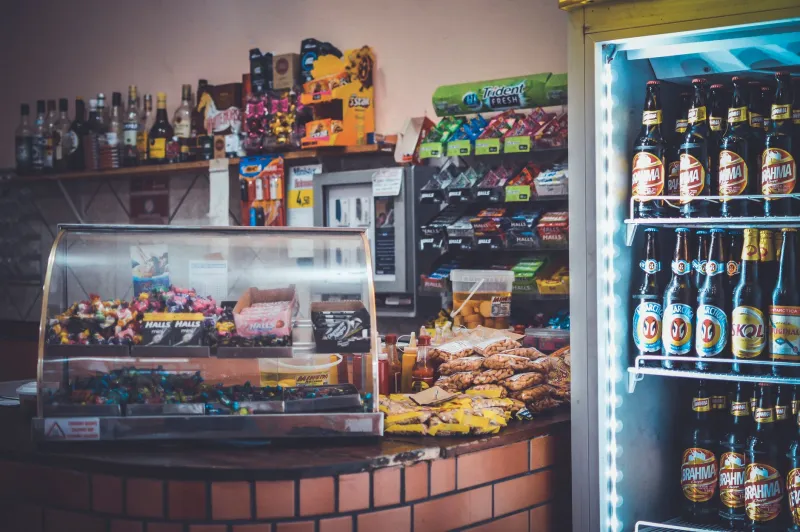
There is a moment — brief, primal, faintly spiritual — that occurs in every Australian's life at least once a fortnight. You're standing at a servo. You didn't plan to stop. Maybe you needed fuel, maybe you needed a Powerade, maybe you were just doing that thing where you pull into a servo car park and stare at the wall for thirty seconds to collect yourself. Either way, you end up in front of the pie warmer. And the pies are just there. Rotating slowly, or not rotating at all, glazed in their own ambition, daring you to make a choice.
You grab one. Of course you do. You are Australian.
What happens next is entirely beyond your control.
The Warmer: A Device With No Concept of Time
The servo pie warmer is, functionally, a machine that exists outside the normal laws of the universe. It does not care what time it is. It does not care what day it is. It operates on a single, unwavering philosophy: keep pies warm until someone buys them or the sun burns out, whichever comes first.
Ask a servo attendant how long the pies have been sitting there and you will receive one of three responses: a shrug, a vague gesture toward the back of the store, or a cheerful "not long, mate" that neither of you believes. This is not a criticism. This is simply the social contract of the servo pie transaction. Both parties understand the situation. Both parties proceed anyway.
The heat lamp itself is an engineering marvel of ambiguity. It keeps the exterior of the pie at exactly the temperature required to suggest freshness while the interior operates on its own independent thermal schedule. You might bite into a pie that's scalding in one corner and lukewarm in another. You might encounter a pastry crust that has transitioned, over many hours, from flaky to something closer to particleboard. These are features, not bugs. They are part of the experience.
Flavour: A Loose Concept
Let's talk about what's actually inside these things, because "meat pie" is doing a lot of heavy lifting as a descriptor.
The classic mince variety is the baseline. It tastes like gravy made a promise it mostly kept. The mince itself exists in a state somewhere between identifiable and philosophical — you know it's there, you accept its presence, you do not interrogate it further. This is the pie equivalent of a firm handshake. Reliable. Functional. Asks nothing of you.
Then there's the chunky beef. This one has ambitions. It wants you to know there are pieces in there, actual chunks of something, and for the most part it delivers. The chunks vary in texture depending on how long the pie has been communing with the heat lamp, ranging from tender to something you'd describe as "determined." Either way, you respect the effort.
The pepper steak is for people who want a pie but also want to feel slightly sophisticated about it. It delivers a warmth that lingers in your chest long after the servo has disappeared in your rearview mirror, which you choose to interpret as satisfaction rather than a warning sign.
And then there are the outliers. The chicken and mushroom. The curry. The occasional "gourmet" pie in the fancier servos that charges four dollars more and arrives in a box with a picture of a farmhouse on it, as if the provenance of the pastry has been carefully documented. These are for adventurers. People who have looked at the baseline servo pie gamble and decided they wanted higher stakes.
The Chain Variance Problem
Not all servo pies are created equal, and every Australian who drives long distances has developed strong opinions on this topic that they will share whether or not you asked.
Some chains maintain their pie warmers with something approaching dedication. The pastry holds its shape. The filling-to-pastry ratio is sensible. The whole thing survives the trip from warmer to paper bag to your lap with its dignity intact.
Other chains treat the pie warmer as a philosophical statement about impermanence. The pies there have clearly been through something. They have a look in their eye — metaphorically speaking — of a thing that has survived longer than it expected to. The pastry may have developed a slight translucency. The filling has settled into the bottom half and formed opinions. You eat it anyway because you're forty kilometres from the next servo and your options are limited.
The regional variation is also real. Country servos operate under a completely different set of pie rules. A pie from a servo in a small town on the Newell Highway at 7am on a Tuesday is often, inexplicably, outstanding. Nobody can explain this. It is one of Australia's great unsolved mysteries, ranking somewhere between the disappearance of Harold Holt and why we collectively agreed that wearing thongs to a pub is fine.
Why We Keep Doing This
Here is the honest truth about the servo pie: we know the risks and we do not care.
This is not stupidity. It is not even recklessness, exactly. It is something more culturally specific — a kind of cheerful fatalism that is baked into the Australian relationship with convenience food. The servo pie asks very little of you intellectually. It does not require a menu, a reservation, or a decision about whether you want something on the side. You grab it, you eat it, you either feel fine or you spend the next hour making promises to yourself about better choices. Either way, life continues.
There is also something deeply comforting about the ritual itself. The warmth of the paper bag. The first bite through pastry into filling, that small moment of suspense before you discover whether today's pie is a triumph or a cautionary tale. It's a tiny, low-stakes adventure that punctuates an otherwise predictable day.
Australians have always had a soft spot for the underdog, the rough-around-the-edges option, the thing that doesn't look flash but gets the job done. The servo pie is all of these things simultaneously. It is unpretentious to the point of being almost confrontational about it.
A Final Word of Advice
If you are about to make a servo pie decision, here is what years of collective national experience suggests:
Avoid any pie that looks too good. A pie that appears freshly baked in a servo context is either a genuine miracle or a trap, and the odds favour the latter. The slightly humbled pie — a little shiny, a little settled — has already proven it can survive. Trust the survivor.
Always check the bottom. If the base has gone soft and is threatening to give way, you are looking at a pie that has been sitting there since before you had problems. This is still your call, but you should make it with full information.
And never, under any circumstances, ask what kind of meat it is. You know what kind of meat it is. It's servo pie meat. That's the only answer that matters, and it's been good enough for generations of Australians who turned out just fine.
Probably.